Two-Way SMS for Healthcare, in One Shared Inbox
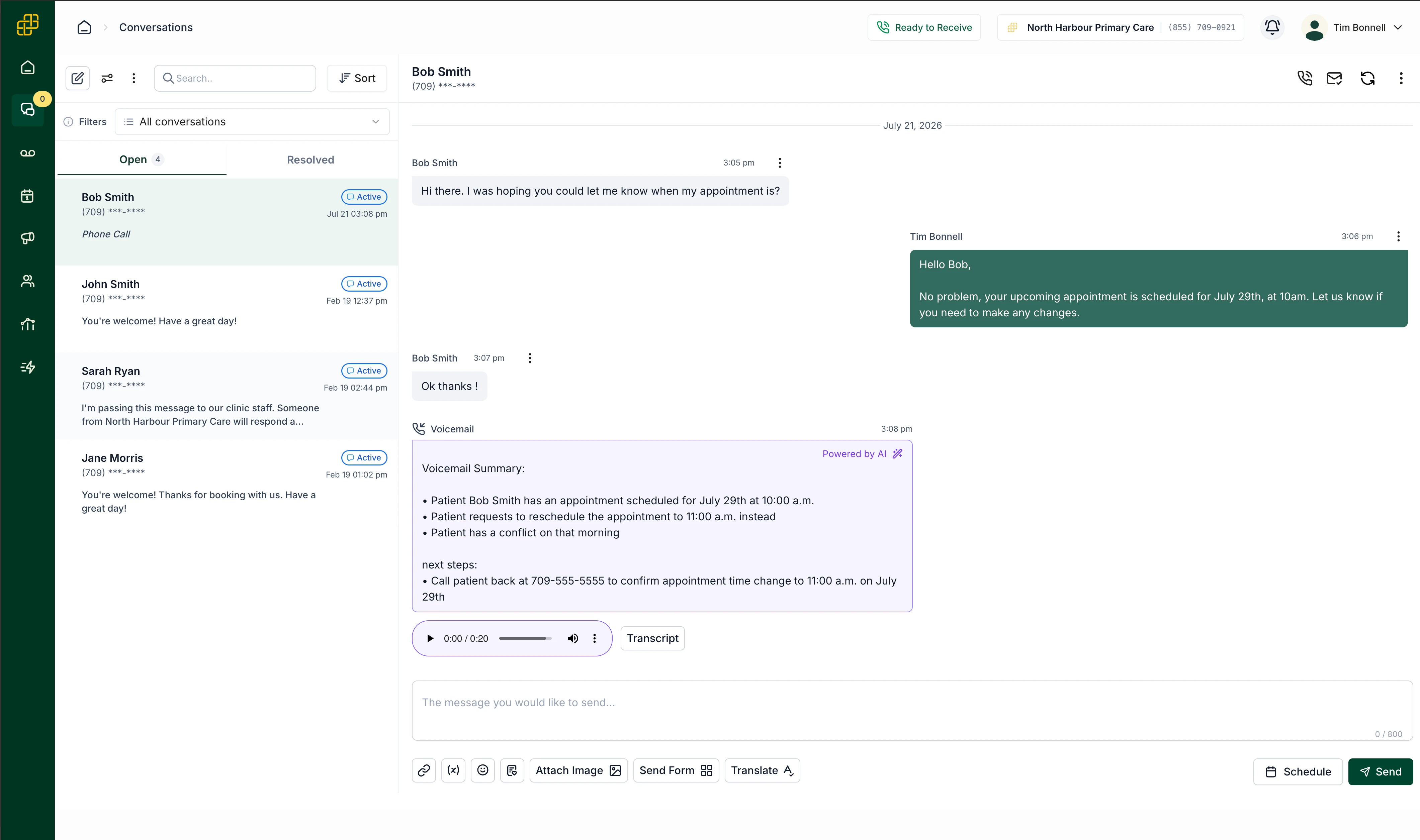
SMS for healthcare on Carrick is two-way by default. Every patient text lands in one shared inbox alongside that patient's calls, voicemails, forms, and appointment messages, and the whole front-desk team works from it. Not one-way blasts from a marketing tool — real conversations, tied to the right record. HIPAA and PIPEDA/PHIPA compliant, with a signed BAA on every plan.
Your patients already text. Your staff already field calls and voicemails all day. Carrick puts both in the same place so the front desk stops switching between a phone, a portal, a fax, and someone's personal cell. It is built for healthcare only — not a business-texting platform with a healthcare landing page.
This page covers what SMS for healthcare is used for, why a two-way shared inbox beats one-way texting tools, and how Carrick keeps every message compliant in the US and Canada.
What is SMS for healthcare?
SMS for healthcare is the use of text messaging as a communication channel between a healthcare organization and its patients — and, internally, its staff. Patient-facing uses include appointment reminders and confirmations, two-way conversations about scheduling and care, digital intake and consent links, post-visit follow-up, and recall or screening outreach; operational uses include filling open shifts and internal alerts. This page is about the patient-facing side.
Standard consumer SMS is not secure enough for protected health information on its own — consumer messaging apps will not sign a Business Associate Agreement, so healthcare organizations send patient texts through a dedicated platform that adds encryption in transit and at rest, role-based access controls, complete audit logging, a signed BAA, and documented patient consent with a standing opt-out.
In the United States this is governed by HIPAA; in Canada, by PIPEDA and PHIPA, which also require patient data to be stored on Canadian servers. The specific controls Carrick applies are covered under compliance below.
Why a two-way shared inbox beats one-way SMS tools
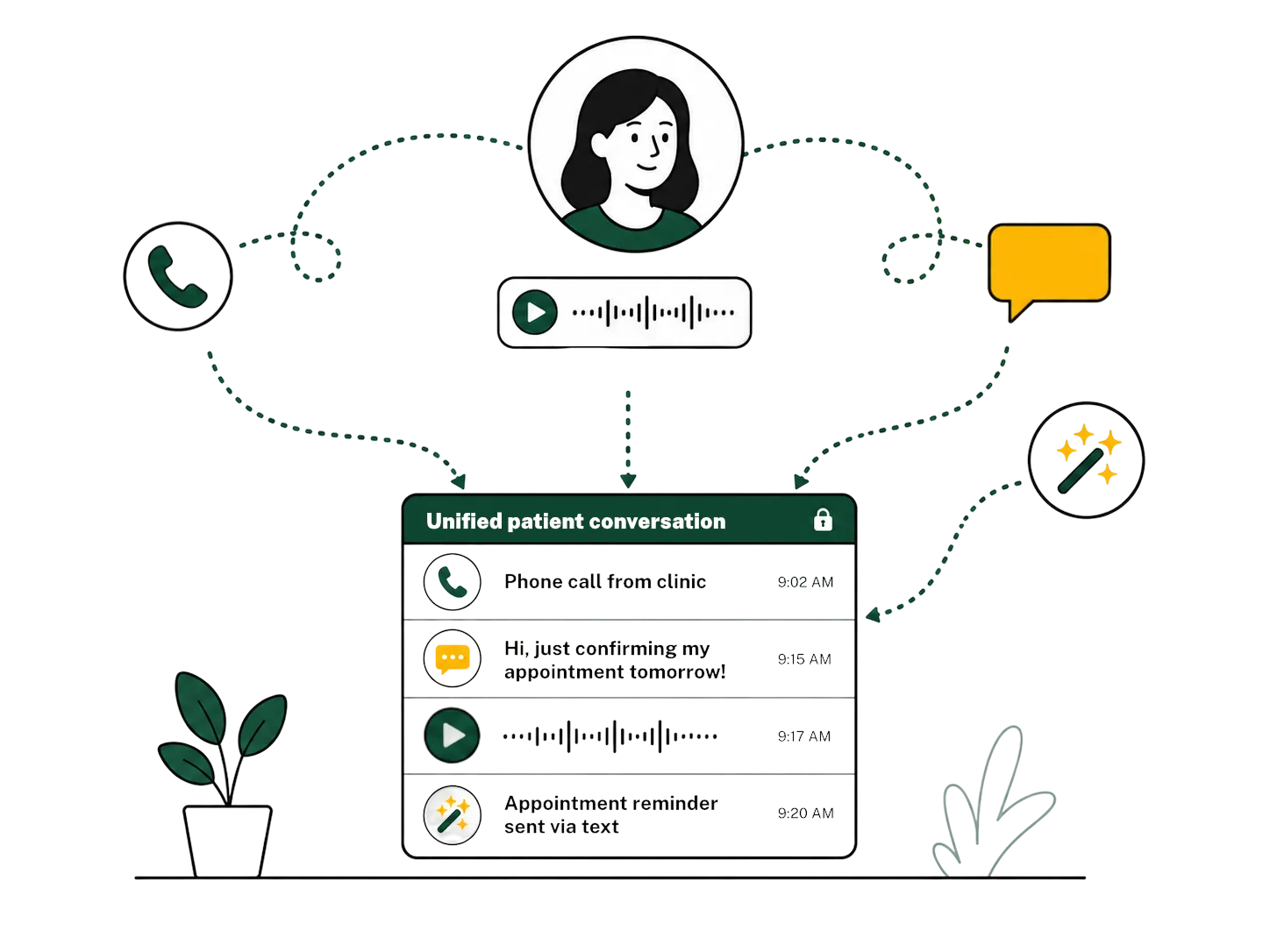
Most healthcare SMS tools send one direction: automated reminders and marketing blasts. A shared inbox makes texting two-way — every patient reply lands in one thread the whole team works from, next to that patient's calls and voicemails, with full history attached. Patients get answers, not just notifications.
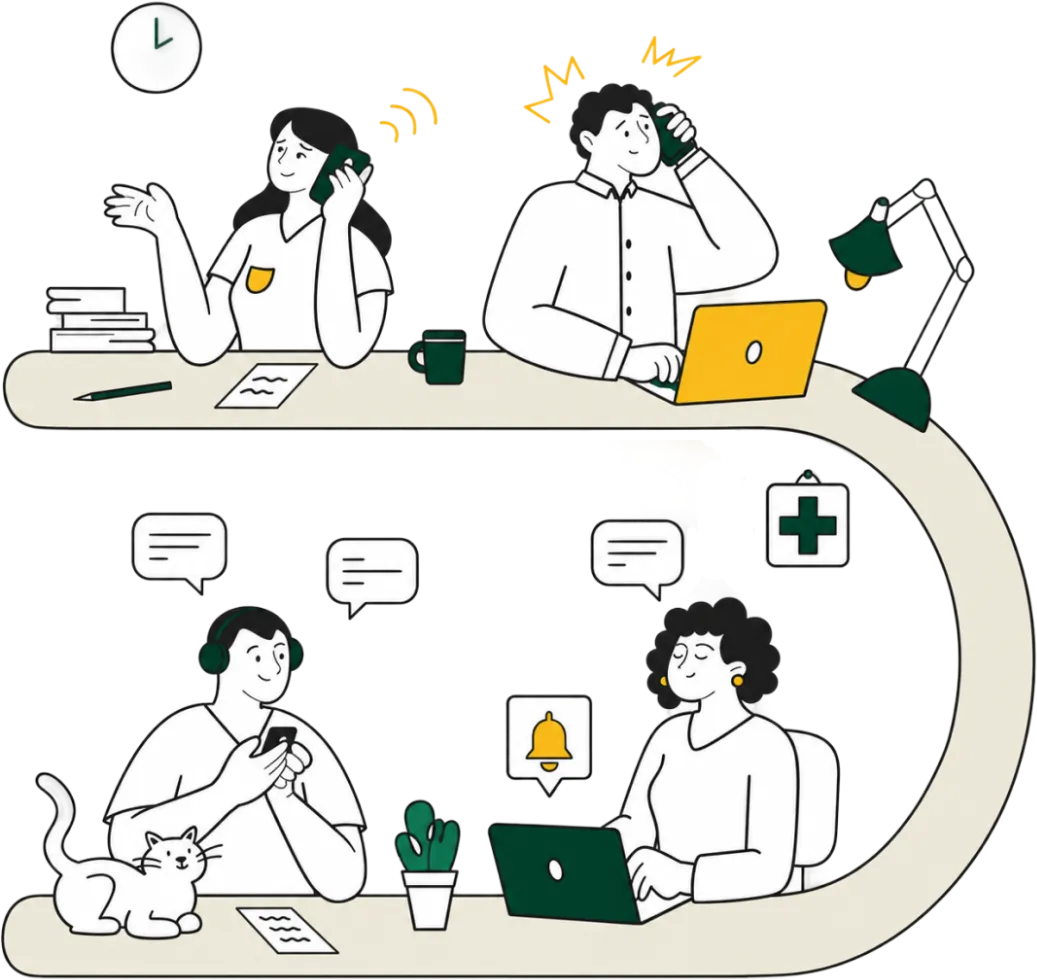
The usual setup leaks patients and risk in equal measure. Reminders go out from one tool, the front desk texts from a personal phone, voicemails sit in a mailbox only one person checks, and intake forms arrive by fax. When that staffer is on vacation, the thread goes cold. When a patient replies "can we move it to Thursday," nobody sees it next to the appointment.
A two-way shared inbox fixes the operational problems and the compliance ones at once:
Replies go somewhere. A patient answer to a reminder becomes a conversation a person handles, not a dead end.
No PHI on personal devices. Staff text from Carrick, not their own number, so nothing lives on a phone that leaves the building.
Faster response. The first available person answers, instead of a message waiting for its owner.
Clean handoffs. A conversation moves between staff with its full history attached — no "what did the patient already say?"
One place to prove consent. Consent status and opt-outs show on the contact, not in a spreadsheet.
Coverage that holds. Time off, turnover, and multi-site rosters do not create gaps.
What lands in the shared inbox
- Two-way patient texts
- Inbound and outbound calls
- Transcribed voicemail
- Completed intake and consent forms
- Appointment confirmations and patient replies
- Trackable link clicks from broadcasts
What healthcare teams use SMS for on Carrick
Carrick turns each common healthcare SMS use case into a managed conversation instead of a one-way send. The same inbox handles all of them, so staff are not switching tools by task.
Appointment reminders and confirmations. Automated reminders go out; replies to reschedule or cancel come straight back into the inbox.
Two-way patient questions. Patients text the practice number with a question; any front-desk staffer can answer with the full history in view.
Intake and consent. Send a secure link to a digital form before the visit; the completed form files to the patient thread.
Post-visit follow-up. Check in after a procedure or a new prescription and catch problems early.
Recalls and outreach. Message a defined patient group — overdue for a visit, due for a screening — and handle the replies.
Missed-call recovery. An unanswered call converts to a text automatically, so the patient is reached instead of lost to voicemail.
How Carrick keeps healthcare SMS compliant
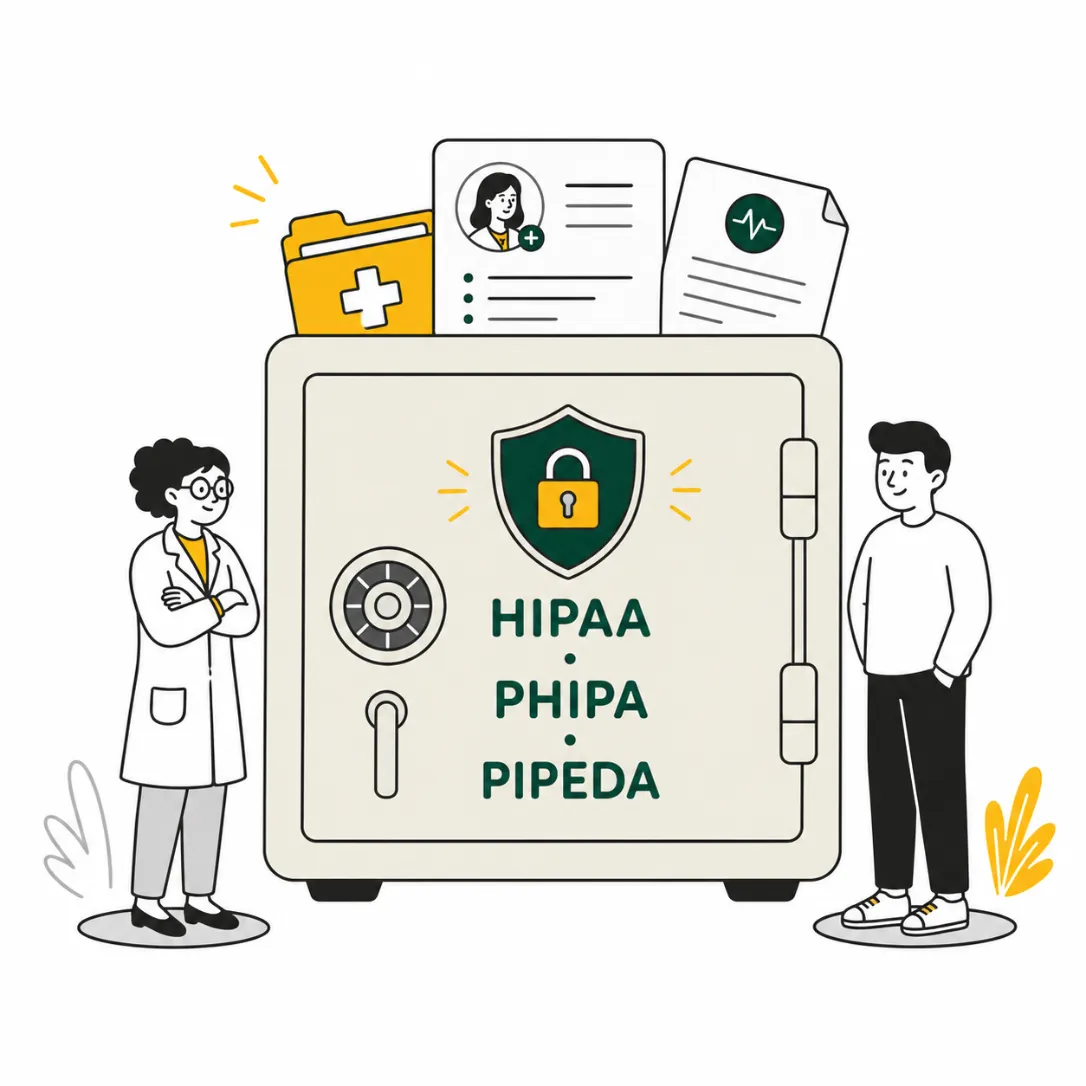
Carrick ships every HIPAA safeguard by default: encryption in transit and at rest, individual staff logins with role-based access, a complete audit log, a signed BAA on every plan, automatic STOP opt-out handling, and message templates written to keep protected health information minimal. There is no separate compliance tier to buy.
Compliance is not a setting the practice has to configure — it is how the product is built. Consent is captured at intake and carried on the contact record. Templates prompt staff to confirm an appointment without spelling out a diagnosis. Every action is logged for the life of the record. If a patient replies STOP, Carrick opts them out everywhere and records it.
Carrick is also compliant for healthcare organizations in Canada. The same product meets PIPEDA and PHIPA, and Canadian patient data is stored on Canadian servers, so a practice operating on both sides of the border runs one platform. For the full breakdown of what makes patient texting compliant, see what makes patient texting HIPAA-compliant and PIPEDA and PHIPA compliance for Canadian clinics.
Built for healthcare front desks, not general business texting
Carrick is designed around the way a clinic front desk actually works: templates that keep PHI minimal, consent capture on intake forms, contact sync with your EMR or practice-management system, and roles that fit multi-team and multi-site operations. A general business-texting tool gives you a phone number; Carrick gives you a patient-communication system.
It serves the settings where patient volume and front-desk load are highest:
- Primary care and family medicine practices
- Pharmacies
- Walk-in and urgent-care clinics
- Public-health clinics and programs
- Outpatient and specialty services
- Multi-site clinic groups and health authorities
Teams running several locations share one inbox with per-site routing, so a regional group can standardize patient communication without forcing every clinic onto a separate tool.
Proof — NL Health Services
NL Health Services runs patient communication for more than 30 clinics and roughly 70,000 patients on Carrick. After moving text, reminders, and phone follow-up into one shared inbox, preventable no-shows dropped 80% and inbound call volume fell 50%.



















It has significantly reduced the time staff spend calling patients and responding to voicemail. It allows the program to reallocate time to other clinical and administrative tasks. As well, patients are finding it much easier to contact the clinic, ask questions, and book or adjust their screening appointments.
Greg Doyle
Provincial Manager, Breast Screening Program, NL Health Services
See every patient conversation in one place.
Book a demoFrequently asked questions
What is SMS for healthcare?
SMS for healthcare is the use of text messaging between a medical organization and its patients — appointment reminders and confirmations, two-way conversations about scheduling and care, digital intake and consent links, post-visit follow-up, and recall or screening outreach. Because standard SMS is not encrypted, healthcare organizations send patient texts through a dedicated platform that adds encryption, access control, audit logging, and a signed Business Associate Agreement. Carrick provides all of that on every plan.
Is SMS for healthcare HIPAA-compliant?
Standard consumer SMS is not, on its own. Texting patients is permitted under HIPAA when it runs on a platform that encrypts messages in transit and at rest, controls and logs staff access, is backed by a signed Business Associate Agreement, and records patient consent with an opt-out. Carrick meets all of these requirements by default. Texting patients from a personal cell phone or an app like iMessage or WhatsApp is not compliant.
What is two-way texting, and how is it different from mass texting?
Two-way texting means patients can reply and have a real conversation, not just receive an alert. Mass or one-way texting sends notifications — reminders, closures, marketing — with no path back. Carrick is two-way: every reply lands in a shared inbox next to the patient's calls and voicemails, so a "can we reschedule?" becomes a booking a staff member handles, not a dead end.
Do patients need an app to use medical texting with Carrick?
No. Patients text from the standard messaging app already on their phone. There is no download, login, or account for the patient. The security controls run on Carrick's side, so the patient experience is an ordinary text conversation while the practice keeps encryption, access control, and audit logging.
How is patient text messaging different from a patient portal?
A patient portal is a separate website patients must create an account for and remember to check. Patient text messaging delivers to the phone the patient already uses, which is why response and engagement rates are consistently higher. Carrick combines both: portal-grade security with the reach of native text.
Can our whole front-desk team text patients from one shared inbox?
Yes. Carrick is a shared inbox by design. Every authorized staff member sees the full history of each patient's texts, calls, and voicemails, can respond, and can hand off a conversation with context. Access is role-based and every action is logged, so shared access does not weaken the audit trail — and coverage does not break when one person is out.